missing translation for 'onlineSavingsMsg'
Learn More
Learn More
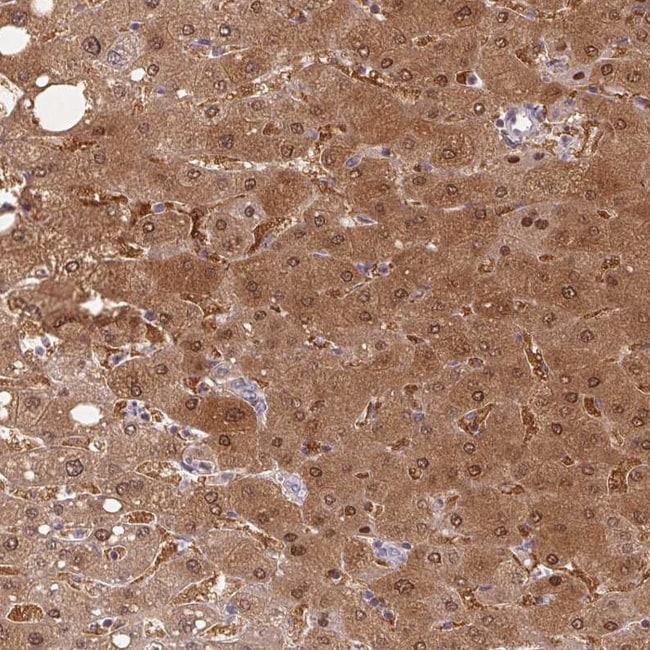


Description
Immunogen sequence: TPEKDFAEHL LIPRTRGLLS GWARNGTDLG NSLTTRPVTL VEGEECGQVL NVTVTTRTYC ERSSVAAMHW MDGSVVTREH RGSWFLTGVL GSQPVGGQAH MVLVTKVSRY S Highest antigen sequence identity to the following orthologs: Mouse - 63%, Rat - 62%.
PROZ protein Z, vitamin K-dependent plasma glycoprotein. It is 62 kDa large and 396 amino acids long. It has four domains: a gla-rich region, two EGF-like domains and a trypsin-like domain. It lacks the serine residue that would make it catalytically active as a serine protease. It is a member of the coagulation cascade, the group of blood proteins that leads to the formation of blood clots. It is vitamin K-dependent, and its functionality is therefore impaired in warfarin therapy. It is a glycoprotein. Although it is not enzymatically active, it is structurally related to several serine proteases of the coagulation cascade: factors VII, IX, X and protein C. The carboxyglutamate residues (which require vitamin K) bind protein Z to phospholipid surfaces. The main role of protein Z appears to be the degradation of factor Xa. This is done by protein Z-related protease inhibitor (ZPI), but the reaction is accelerated 1000-fold by the presence of protein Z. Oddly, ZPI also degrades factor XI, but this reaction does not require the presence of protein Z. In some studies, deficiency states have been associated with a propensity to thrombosis. Others, however, link it to bleeding tendency; there is no clear explanation for this, as it acts physiologically as an inhibitor, and deficiency would logically have led to a predisposition for thrombosis.

Specifications
Specifications
| Antigen | Protein Z |
| Applications | Immunohistochemistry (Paraffin), Western Blot |
| Classification | Polyclonal |
| Concentration | 0.1 mg/mL |
| Conjugate | Unconjugated |
| Formulation | PBS with 40% glycerol and 0.02% sodium azide; pH 7.2 |
| Gene | PROZ |
| Gene Accession No. | P22891 |
| Gene Alias | protein Z, vitamin K dependent plasma glycoprotein; protein Z, vitamin K-dependent plasma glycoprotein; PROZ; PZ; vitamin K-dependent protein Z; vitamin K-dependent protein Z precursor variant 1 |
| Gene Symbols | PROZ |
| Show More |
Product Title
By clicking Submit, you acknowledge that you may be contacted by Fisher Scientific in regards to the feedback you have provided in this form. We will not share your information for any other purposes. All contact information provided shall also be maintained in accordance with our Privacy Policy.
Spot an opportunity for improvement?