missing translation for 'onlineSavingsMsg'
Learn More
Learn More
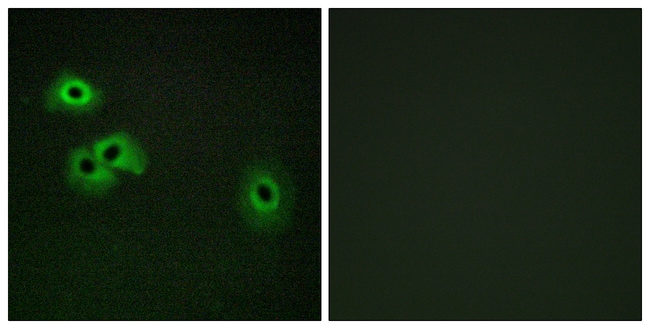
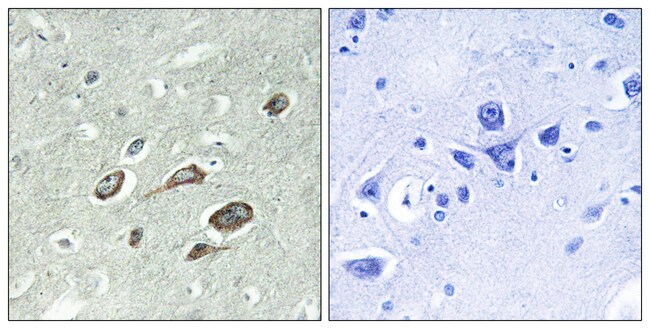
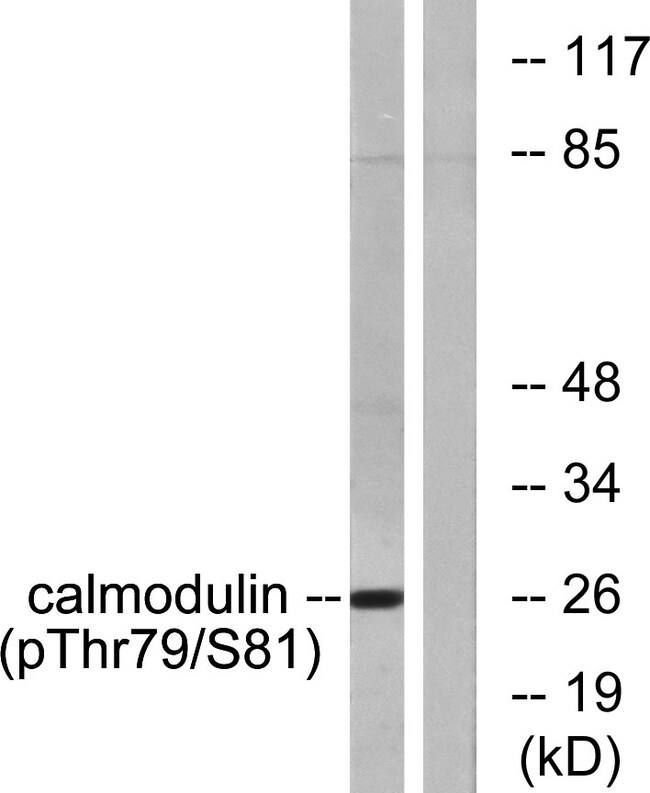
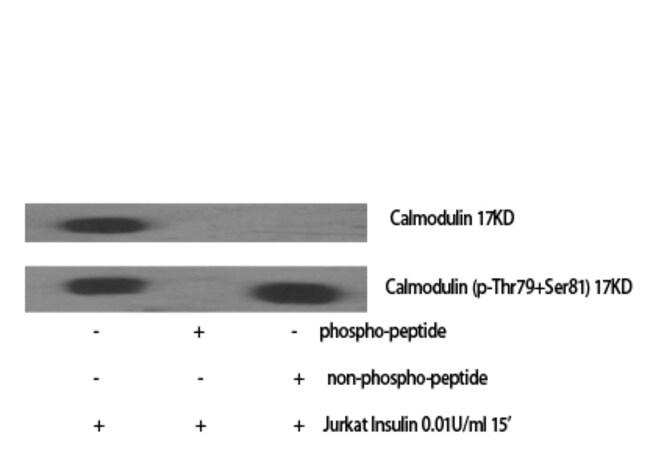
Invitrogen™ Phospho-Calmodulin (Thr79, Ser81) Polyclonal Antibody

Description
A suggested positive control for Western blot is HeLa cells.
Calmodulin mediates the control of a large number of enzymes, ion channels, aquaporins and other proteins by Ca2+. Among the enzymes to be stimulated by the calmodulin-Ca2+ complex are a number of protein kinases and phosphatases. Together with CCP110 and centrin, is involved in a genetic pathway that regulates the centrosome cycle and progression through cytokinesis. Calmodulin is a small, highly conserved calcium binding protein found in all eukaryotic cells. With the capacity to bind up to four calcium ions, this 17 kDa protein acts as an important intracellular receptor for regulatory calcium signals. As it binds calcium, calmodulin undergoes conformational changes which can increase its affinity for target proteins. It acts both directly, through interaction with key target enzymes, and indirectly, via specific kinases. Studies have found that calmodulin participates in the regulation of several biological processes including energy and biosynthetic metabolism, cell motility, exocytosis, cytoskeletal assembly, and intracellular modulation of both cAMP and calcium concentrations. Calmodulin is the archetype of the family of calcium-modulated proteins of which nearly 20 members have been found. They are identified by their occurrence in the cytosol or on membranes facing the cytosol and by a high affinity for calcium. Calmodulin contains 149 amino acids and has 4 calcium-binding domains. Its functions include roles in growth and the cell cycle as well as in signal transduction and the synthesis and release of neurotransmitters.

Specifications
Specifications
| Antigen | Phospho-Calmodulin (Thr79, Ser81) |
| Applications | Immunohistochemistry (Paraffin), Western Blot, Immunocytochemistry |
| Classification | Polyclonal |
| Concentration | 1 mg/mL |
| Conjugate | Unconjugated |
| Formulation | PBS with 50% glycerol and 0.02% sodium azide; pH 7.4 |
| Gene | Calm2 |
| Gene Accession No. | P0DP23, P0DP24, P0DP25, P0DP26, P0DP27, P0DP28, P0DP29, P0DP30, P0DP31, Q9JM83 |
| Gene Alias | 1500001E21Rik; 2310037J09Rik; AI256814; AI327027; AI461935; AI649108; AL024000; AL024017; AY314008; calcium binding gene, DD112; calcium-binding protein Dd112; CALM; CALM 1; CALM1; CALM2; Calm3; Calm4; Calm5; CALML2; Calmodulin; calmodulin 1; calmodulin 1 (phosphorylase kinase, delta); calmodulin 2; calmodulin 2 (phosphorylase kinase, delta); calmodulin 3; calmodulin 3 (phosphorylase kinase, delta); calmodulin 4; calmodulin 5; Calmodulin III; calmodulin-1; Calmodulin-2; calmodulin-3; Calmodulin-4; calmodulin-like; calmodulin-like protein; calmodulin-like protein (neoCaM); caM; CAM1; Cam2; CAM3; CaMA; Camb; CamC; CaMI; CAMII; CAMIII; CPVT4; DD112; DD132; DD312; epididymis secretory protein Li 72; HEL-S-72; hypothetical protein; LP7057 protein; LQT14; LQT15; MGC128137 protein; neo-calmodulin; NeoCaM; PHKD; PHKD2; PHKD3; phosphorylase kinase delta; phosphorylase kinase subunit delta; phosphorylase kinase, delta subunit; prepro-calmodulin 1; prepro-calmodulin 2; prepro-calmodulin 3; R75142; RNCAMIII; Scarf; Scarf2; similar to calmodulin; skin calmodulin-related factor |
| Gene Symbols | Calm1, Calm2, CALM3, CALM4, CALM5 |
| Show More |
Product Title
By clicking Submit, you acknowledge that you may be contacted by Fisher Scientific in regards to the feedback you have provided in this form. We will not share your information for any other purposes. All contact information provided shall also be maintained in accordance with our Privacy Policy.
Spot an opportunity for improvement?