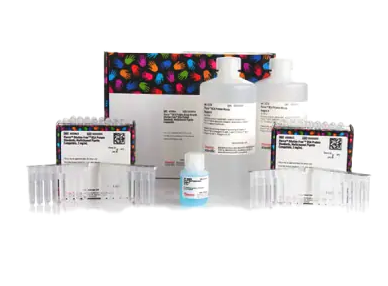
Total Protein Assay Kits
Our selection of protein assay products includes kits and reagents designed to easily determine protein concentration in a sample after cell lysis, purification or labeling. The range includes BCA, Lowry, and Bradford assay kits, bovine serum albumin (BSA) standards, and immunoassay kits.
Useful Links
Save Now - Exclusive Deals
Product Code 10270014

Product Code 9023018

Product Code 18710094

Product Code 10677904
Product Code 18603810
Product Code 10209523

Product Code 10495944

Product Code 200000331

Product Code 10341664

Product Code 10753505
Product Code 11861345

Product Code 15950513
Complete Your Order - Great Deals
Product Code 11870104

Product Code 11583100

Product Code 6909043
Must Have

Product Code 200000333

Product Code 10495315

Product Code 15398086
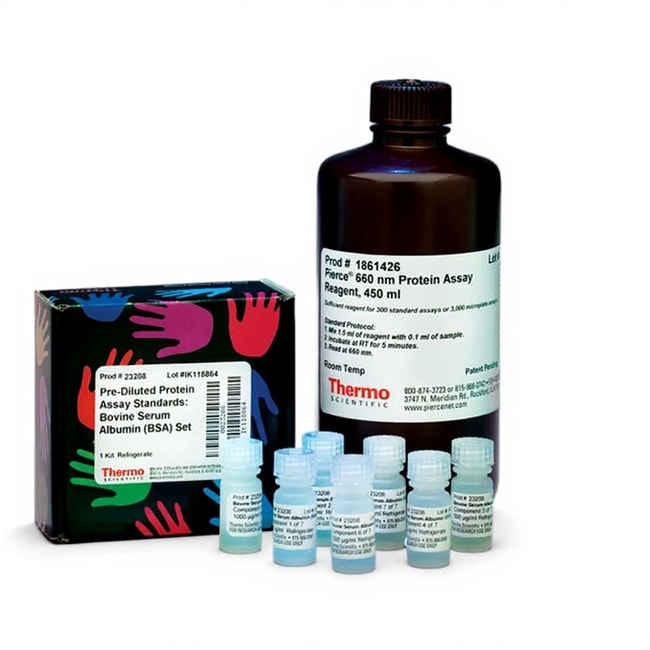
Product Code 10404195
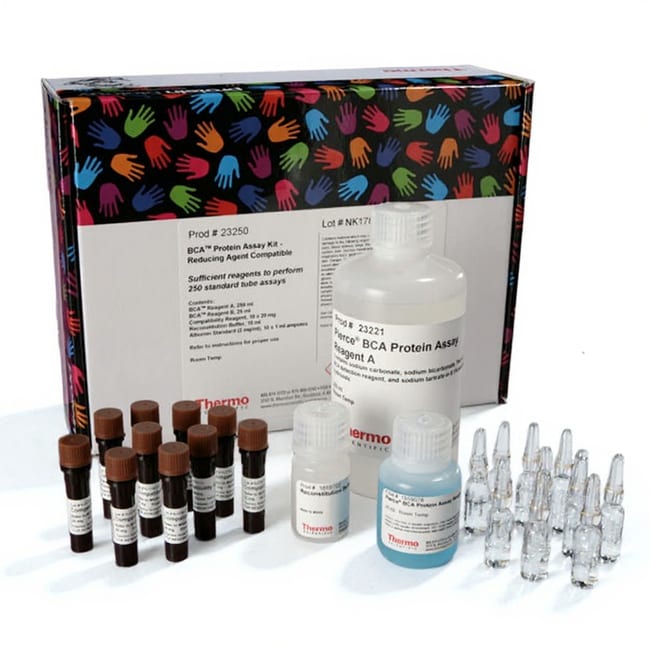
Product Code 10750985

Product Code 10177723

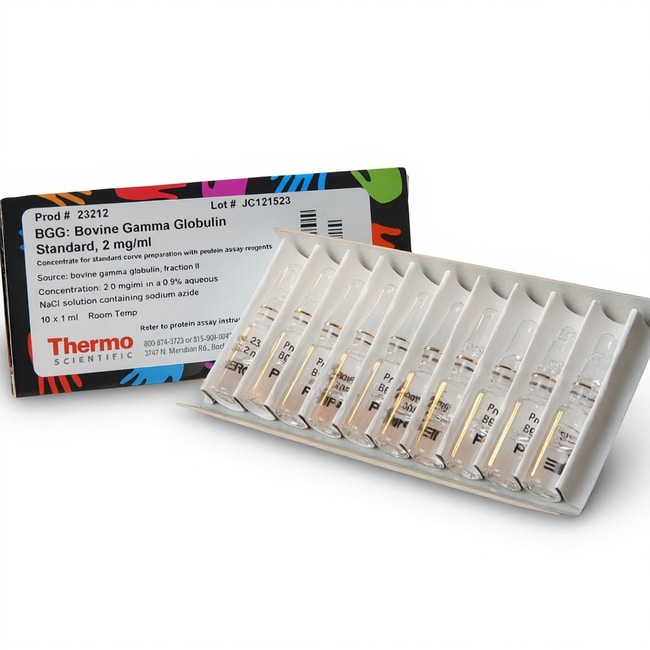
Product Code 10760815
FAQ
A total protein assay is a laboratory technique used to measure the total amount of protein in a sample. This type of assay is commonly used in biochemical and clinical research to quantify protein concentration in various biological samples such as blood serum, cell lysates, or tissue homogenates. Several methods can be used for total protein assays, including:
- Biuret Method: This method involves the formation of a violet-colored complex when proteins react with copper ions in an alkaline solution. The intensity of the color, measured spectrophotometrically, is proportional to the protein concentration
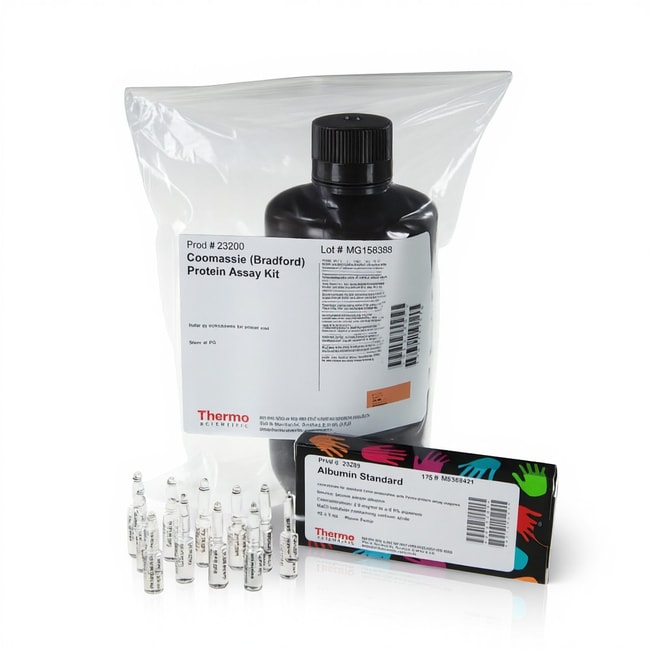
- Bradford Assay: This method uses Coomassie Brilliant Blue dye, which binds to proteins and causes a shift in the dye's absorbance maximum. The change in absorbance is measured spectrophotometrically and is proportional to the protein concentration
- Lowry Assay: This method combines the Biuret reaction with the reduction of the Folin-Ciocalteu reagent, resulting in a blue color whose intensity is proportional to the protein concentration
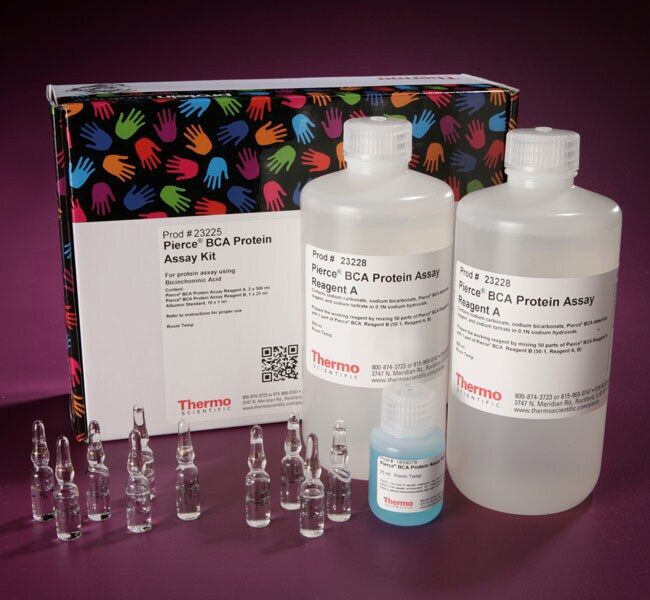
- BCA Assay (Bicinchoninic Acid Assay): This method is based on the reduction of Cu²⁺ to Cu⁺ by proteins in an alkaline environment, followed by the chelation of Cu⁺ by bicinchoninic acid, which produces a purple color. The intensity of the color is measured spectrophotometrically and is proportional to the protein concentration
Each method has its advantages and limitations regarding sensitivity, specificity, and ease of use. The choice of method depends on the specific requirements of the experiment and the nature of the sample being analyzed.
An alternative to the BCA assay is the Bradford assay. Both assays are commonly used for determining protein concentration, but they operate based on different principles and have distinct advantages and limitations.
The Bradford assay utilizes Coomassie Brilliant Blue dye, which binds to proteins, primarily through arginine residues, and causes a shift in the dye's absorbance maximum. The resulting color change can be measured spectrophotometrically.
Advantages:
- Quick and simple to perform
- High sensitivity for detecting low protein concentrations
- Less interference from common laboratory reagents (e.g., reducing agents, detergents)
Limitations:
- The response can vary depending on the protein composition (e.g., arginine content)
- Less linear range compared to BCA and Lowry assays
Bradford assay is highly sensitive, but the BCA assay can be more consistent across different types of proteins. The Bradford assay is less affected by certain chemicals (e.g., detergents) that can interfere with the BCA assay. The BCA assay generally has a broader linear range compared to the Bradford assay.
The choice between the BCA assay and its alternatives depends on the specific requirements of the experiment, the nature of the sample, and the presence of interfering substances.
When selecting a total protein assay kit, it's important to consider several factors to ensure the kit meets the specific needs of your experiment and provides reliable results. Here are five key considerations:
1) Sensitivity and Detection Range:
Determine whether the assay can detect the protein concentrations present in your samples. Some assays are more sensitive than others, which is crucial for samples with low protein concentrations. Ensure the assay has an appropriate dynamic range to accurately measure the protein concentrations in your samples without the need for excessive dilution or concentration.
2) Sample Compatibility:
Confirm that the assay is compatible with the types of samples you plan to analyze (e.g., serum, plasma, cell lysates, tissue homogenates). Evaluate whether common components in your samples (e.g., detergents, reducing agents, salts) could interfere with the assay. Some assays are more tolerant of such components than others.
3) Accuracy and Precision:
Check if the assay provides accurate measurements that are consistent with known standards or other validated methods. Consider the reproducibility of the assay results. High precision is essential for reliable and consistent data, especially when comparing multiple samples or experimental conditions.
4) Ease of Use and Time Required:
Assess the complexity of the assay protocol. Simpler, more straightforward procedures can save time and reduce the potential for user error. Consider the total time required to complete the assay, from sample preparation to data acquisition. Faster assays can improve throughput and efficiency in the lab.
5) Cost:
Evaluate the cost of the assay kit, including any necessary reagents and consumables. Balance the cost against your budget and the number of samples you need to analyze.
By carefully considering these factors, you can select a total protein assay kit that best suits your experimental needs and provides accurate, reliable results.
Resources and Related Information


Top Brands