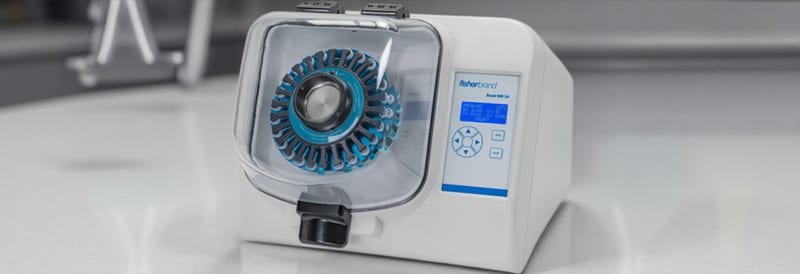
Sample prep is quite often still considered by labs to be one of the most time-consuming and error-prone processes in molecular workflows, depending on the degree of manual steps/intervention points. It’s a pursuit well worth the effort, however, since the proverbial GIGO (garbage in, garbage out) applies in labs for diverse analytical methods as well. The process of optimizing sample prep starts with minimizing risk of upstream failure while balancing the throughputs needed for labs to carry out their experiments. Well-placed, automation-enabled equipment such as bead mill homogenizers could be leveraged for just that: helping labs potentially improve yield and analytical reproducibility, making it a silent hero in the lab’s daily grind.
Bead mill homogenizers are highly effective lab assets when it comes to increasing throughput and gaining analytical reproducibility for upstream sample prep, especially for tough tissues or heterogeneous matrices. Plus, it touches multiple workstreams because they are an analyte-agnostic value-add, which can feed into multiple extraction paths for a variety of downstream assays.
Another benefit includes the fact that bead kits are sealed tubes, which helps reduce the risk of cross-contamination, and it also protects lab researchers and operators from aerosolized particles. Closed vessels during sample processing helps support labs as they scale into high-throughput workflows as it allows simultaneous multi-sample processing with minimal hands-on time, with consistency offered by automated processing. As a result, this technology will enable robustness of many downstream assays sensitive to cross-contamination such as those that are PCR-based like many NGS applications.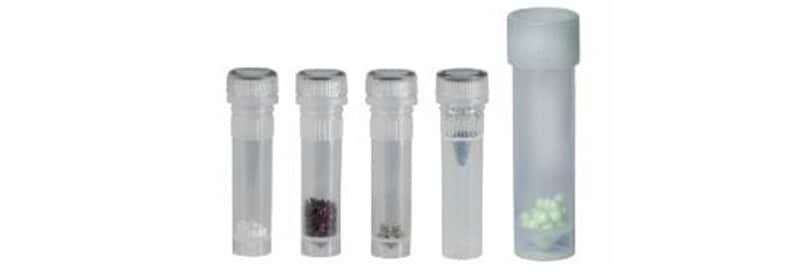
Now, optimizing upstream sample preparation with a bead mill homogenizer involves more than just pressing "start." As we mentioned above, some key choices to optimize the prep that directly impact usability and efficiency of cell lysis and downstream analyte recovery within your experimental design can be outlined below:
Bead types or bead kits, including popular materials such as ceramic, or steel, along with bead size. Matching bead characteristics to sample types often encountered in labs helps ensure more consistent results. Selection of supported sample mass/volume ranges for tube processing and any additional measures for temperature-sensitivity.
Throughput capacity of the unit. Minimizing processing time per sample could help with sample degradation when compared to the time taken to manually process each sample with a handheld rotor-stator.
Sample disaggregation/disruption power afforded by the maximum processing speeds/motions of the bead mill to keep up with the toughness of the sample.
Usage anticipated (and maintenance expectations) that matches your team and their range of needs.
Bead mill homogenizers can offer a powerful, scalable, and contamination-resistant solution for upstream sample prep. What also defines a well-chosen bead mill setup includes proper bead selection, processing tube size, and ease of operational use for your lab’s samples and workflow needs, to help unlock higher efficiency and downstream data output. Whether you're extracting DNA, RNA, or proteins from complex matrices through lysing cells, adopting a bead mill can make all the difference.

Related Products

Catalog Number 15515799

Catalog Number 8750000
Video: Fisherbrand Bead Mills and Bead Kits